
ཤེས་རིག་དང་རིག་རྩལ་གོང་འཕེལ་ལྷན་ཁག།
Ministy of Education and Skills Development


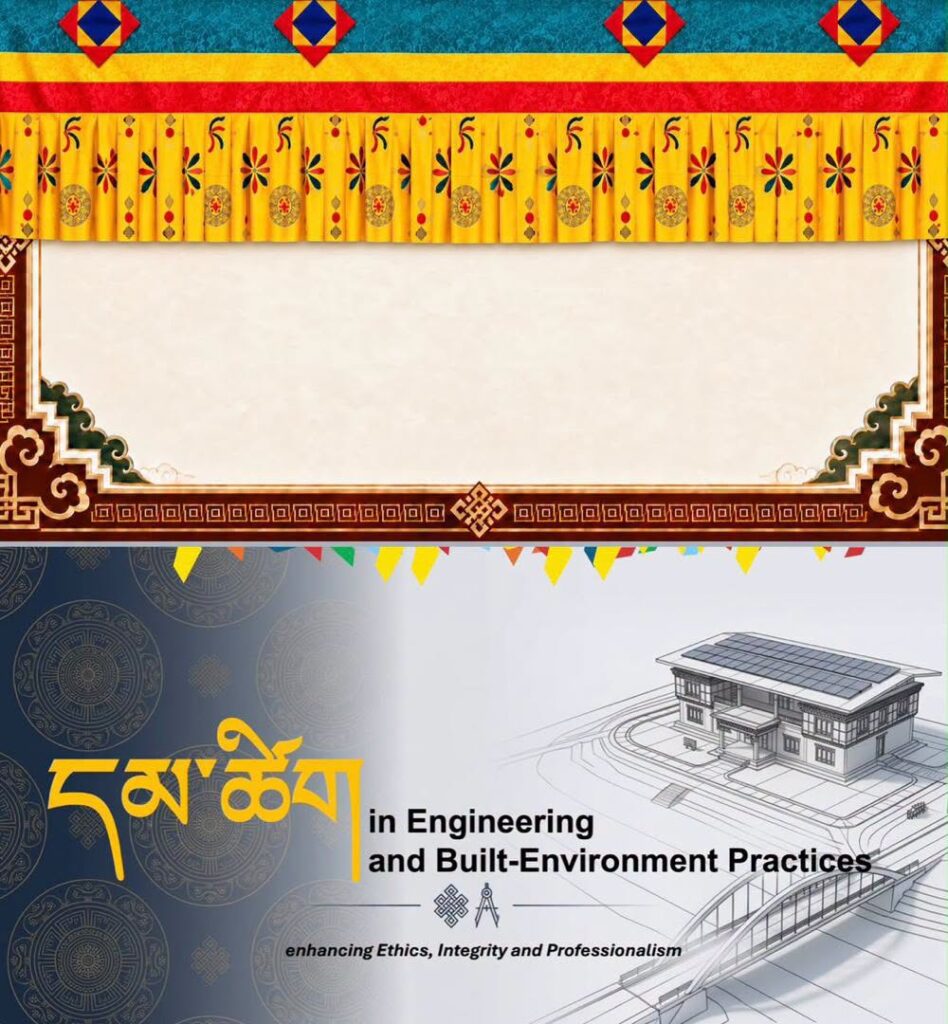
𝐄𝐧𝐠𝐢𝐧𝐞𝐞𝐫𝐢𝐧𝐠 𝐏𝐫𝐨𝐟𝐞𝐬𝐬𝐢𝐨𝐧𝐚𝐥𝐬 𝐂𝐨𝐮𝐧𝐜𝐢𝐥 𝐋𝐚𝐮𝐧𝐜𝐡𝐞𝐬 𝐄-𝐋𝐞𝐚𝐫𝐧𝐢𝐧𝐠 𝐂𝐨𝐮𝐫𝐬𝐞 𝐨𝐧 དམ་ཚིག (𝐃𝐚𝐦𝐭𝐬𝐡𝐢𝐠) 𝐢𝐧 𝐄𝐧𝐠𝐢𝐧𝐞𝐞𝐫𝐢𝐧𝐠 𝐚𝐧𝐝 𝐁𝐮𝐢𝐥𝐭-𝐄𝐧𝐯𝐢𝐫𝐨𝐧𝐦𝐞𝐧𝐭 𝐏𝐫𝐚𝐜𝐭𝐢𝐜𝐞𝐬

The Engineering Professionals Council (EPC), under the Bhutan Qualifications and Professionals Certification Authority (BQPCA), launched its E-Learning Course on དམ་ཚིག (Damtshig) in Engineering and Built-Environment Practices yesterday. The initiative represents an important step towards strengthening ethical conduct, professional responsibility and integrity alongside technical competence among engineering and built-environment professionals in Bhutan.
The course has been developed in collaboration with the Anti-Corruption Commission (ACC) and is designed to provide professionals with accessible, practical and context-specific learning on ethical conduct, professional responsibilities and integrity in the engineering and built-environment sector. The course consists of four modules covering key areas including professional integrity, duties and responsibilities, public trust and corruption-free professional services, and ethical decision-making in professional practice.
The course places particular emphasis on དམ་ཚིག (Damtshig), understood in this context as a commitment to uphold integrity, responsibility and ethical conduct in professional practice. For engineering professionals, this commitment is especially important given the direct impact of engineering and built-environment decisions on public safety, quality, the environment and the use of public resources. By connecting professional ethics with a Bhutanese value, the course seeks to encourage professionals to view ethical practice not only as a regulatory obligation, but also as a personal and professional commitment to society.
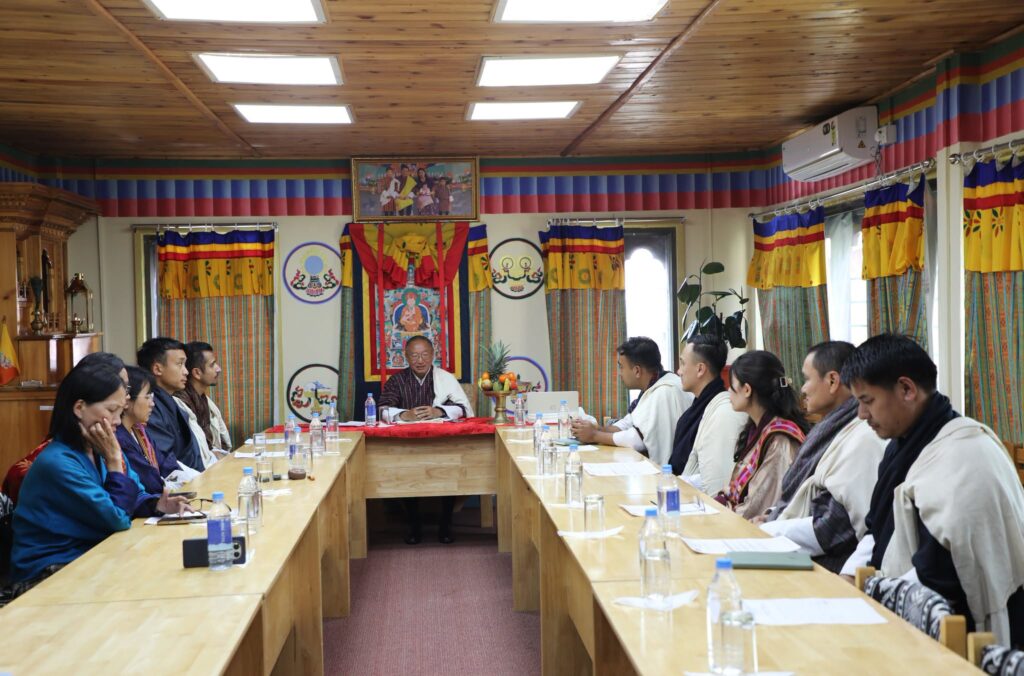
Speaking at the launch, Dr Ugyen Tshewang, Director of BQPCA, commended the EPC for this timely and meaningful initiative and highlighted the importance of embedding ethical values alongside technical competence in professional practice. He noted that engineering professionals are entrusted with responsibilities that have a direct bearing on public safety, infrastructure development, environmental sustainability and public resources, making integrity and accountability fundamental to the profession.
The e-learning course also supports the EPC’s broader efforts to promote continuous professional development and digital access to professional learning. Successful completion of the course will form part of the professional requirements for relevant EPC registration and certification processes and will contribute towards Continuing Professional Development (CPD) requirements.
The launch is also aligned with BQPCA’s ongoing digital transformation efforts to make regulatory and professional services more accessible, efficient and responsive. Through the e-learning platform, engineering and built-environment professionals across the country will be able to access the course without the need for physical attendance, supporting wider participation and continuous learning.

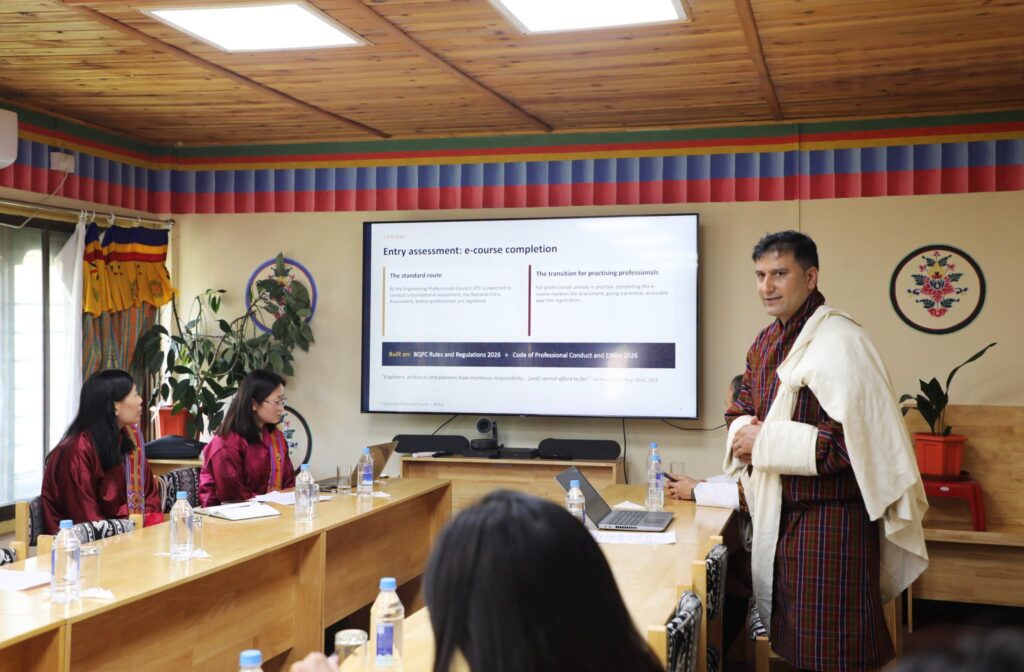
The EPC will begin its registration drive from October 13, providing professionals with an opportunity to engage with the Council’s registration and certification processes and strengthen their professional standing.
The launch was attended by representatives from the Ministry of Infrastructure and Transport, Thimphu Thromde, ACC and officials from the Ministry, reflecting the collaborative effort to strengthen professional ethics, accountability and quality within Bhutan’s engineering and built-environment sector.
The EPC encourages all relevant engineering and built-environment professionals to make use of the e-learning course and contribute towards building a professional culture grounded in དམ་ཚིག, integrity, competence and responsibility.
Ministry of Education & Skills Development
- MoESD, Peling Lam, Kawajangsa, Thimphu, Bhutan
- Postal Code: 11001
- P.O. Box: 112
ICT Services
Important Links
- RENEW
- G2C Services
- Ministry of Health
- Ministry of Finance
- Audit Clearance System
- Asset Declaration System
- Zhiyog Electronic System (ZESt)
- Security Clearance System
- Department of Revenue & Customs
- Government Inventory Management System
- Ministry of Agriculture and Livestock
- Ministry of Industry, Commerce and Employment