ཤེས་རིག་དང་རིག་རྩལ་གོང་འཕེལ་ལྷན་ཁག།
Ministy of Education and Skills Development
Supporting inclusive access to digitalisation in education and skills in Bhutan
Digitalisation in EDUCATION and Skills in Bhutan
Empowering Learners. Enabling Educators. Building a Digital Future.
Empowering every young Bhutanese with the tools for tomorrow, the Royal Government of Bhutan—in partnership with the European Union (EU) and UNICEF—has launched a transformative digital education initiative. Running from 2024 to 2026, this three-year action focuses on breaking down digital barriers for children and youth aged 3 to 24, with a special emphasis on empowering girls, rural communities, and learners with diverse learning needs. By developing an overarching Education Technology Framework, enhancing STEM curricula, and training over 100 master trainers and decision-makers in digital skills and cybersecurity, the project lays a foundation for modern learning. Furthermore, through the testing of innovative connectivity models in targeted schools and TVET institutions, Bhutan is actively closing the connectivity gap—paving the way toward equal opportunities, enhanced employability, and sustainable socio-economic growth for all.
- Project Title
Supporting inclusive access to digitalisation in education and skills in Bhutan
- Objectives
Strengthened digitalisation in education and skills for inclusive socio-economic development by ensuring systems, capacity and connectivity models are in place to support digital learning.
Output 1 - Strengthening Systems for Inclusive Digital Learning
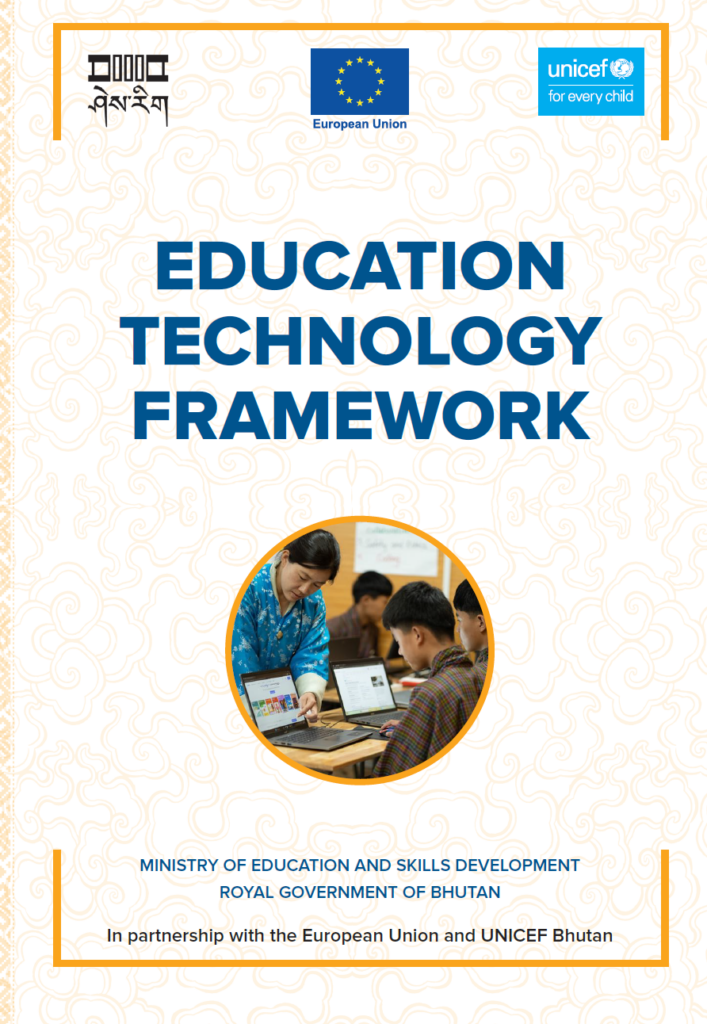
To strengthen systems for an enriched and high-quality digital learning experience, Bhutan is establishing a robust policy framework for basic, secondary, and TVET education, with a strong focus on gender equality and inclusion. The effort introduces national digital standards, enforces online safety, and creates culturally relevant learning tools. Supported by detailed needs assessments to address content gaps for girls and remote communities, the project also deploys UPSHIFT interventions in targeted schools to build practical 21st-century digital skills.
ACTIVITY 1.1: Education Technology Framework (Policy and Standards)
Setting nationwide guidelines and standards to ensure equitable technology integration across basic, secondary, and TVET education. This initiative establishes culturally relevant digital learning models, integrates robust cybersecurity policies, defines expected competencies for teachers and students, and creates accessible formats for diverse learners.
Link to Education Technology Framework
ACTIVITY 1.2: Exclusion & Needs Assessment
Conducting comprehensive assessments through surveys, focus groups, and interviews with teachers, students, and education stakeholders. This activity uncovers specific needs in content development and digital skills, actively identifying barriers to ensure technology reaches girls, rural students, and historically marginalized groups.
ACTIVITY 1.3: 21st-Century Skills via UPSHIFT
Delivering hands-on social innovation and entrepreneurship training to adolescents in targeted schools. By integrating digital tools into the UPSHIFT program, young learners build essential 21st-century skills, critical thinking, and practical digital competencies needed for future career opportunities.
Output 2 - Enhanced digital skills, cybersecurity, and content creation capabilities for MoESD stakeholders, teachers, parents, and students.
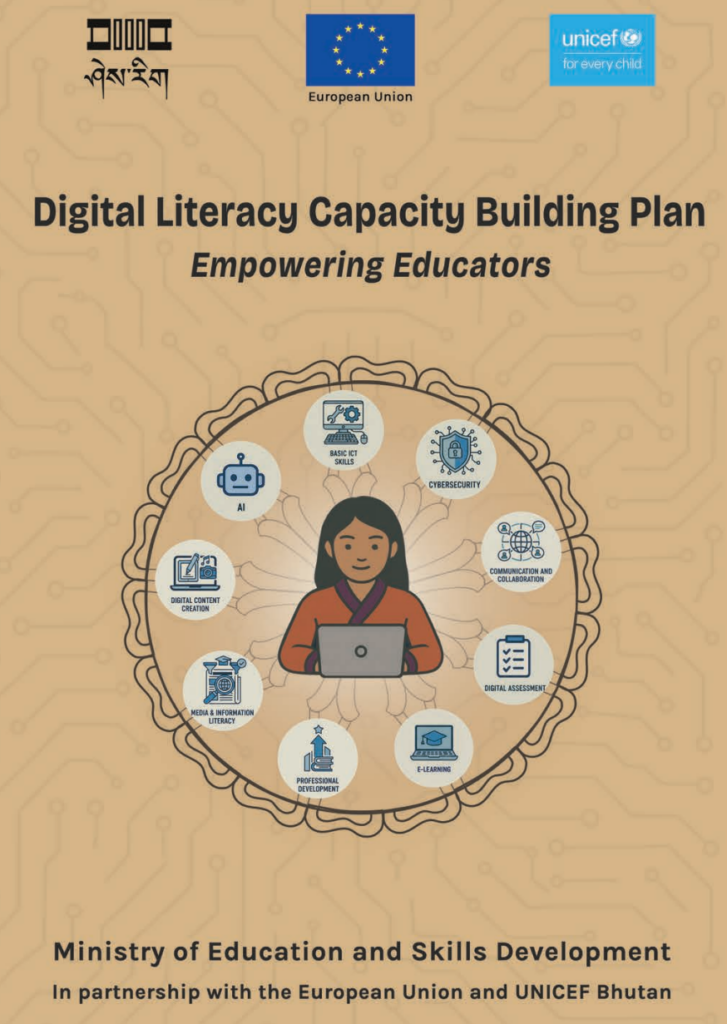
The capacity-building component focuses on enhancing digital, cybersecurity, and content creation skills across Ministry of Education and Skills Development (MoESD) decision-makers, teachers, master trainers, caregivers, and students. To achieve this, a comprehensive capacity-building plan will be established alongside updated teacher training packages on digital teaching methodologies and online safety. Additionally, the initiative involves developing interactive, gender-responsive STEM digital content for 9th and 10th-grade Mathematics and Science. Finally, targeted workshops will train 100 MoESD stakeholders and master trainers in digital content creation, while equipping 100 decision-makers and educators with critical skills in cybersecurity and data privacy.
ACTIVITY 2.1: Strengthen local governance by designing a capacity building plan for teachers, education staff, MoESD stakeholders and caregivers to effectively integrate digital technologies into teaching and learning practices
To successfully integrate digital technology into teaching and learning, this activity establishes a comprehensive capacity-building framework designed for teachers, education staff, MoESD officials, and caregivers. The initiative sets clear goals, target groups, and structured training timelines to ensure a smooth transition toward digital education. By identifying key content areas and learning outcomes, the framework pays special attention to leveraging digital tools to empower women and girls. Finally, it outlines the mobilization of essential resources—ranging from specialized training materials and software tools to robust technological infrastructure—ensuring all stakeholders are fully equipped to drive meaningful educational impact.
ACTIVITY 2.2 : Review the digital competencies for teachers and develop two training packages: (I) digital skill for teaching and learning and (ii) online safety / cybersecurity
This activity focuses on developing a comprehensive training package that embeds digital technologies into the core competency standards expected of teachers and educators. By collaborating with education experts, the initiative will review and update these digital requirements to align with evolving technology trends and future educational goals. The resulting package will enhance teachers’ digital literacy, skills, and competencies through structured modules, practical resources, assessments, and hands-on activities tailored specifically for effective classroom instruction.
ACTIVITY 2.3: Create digital learning content for STEM subjects: 2 subjects (math and science – for two grades, 9 and 10)
By collaborating with subject matter experts and instructional designers, this activity focuses on creating engaging, interactive digital learning content for two secondary-grade STEM subjects. Fully aligned with the curriculum, the content is designed to be gender-responsive and incorporates rich multimedia elements—including videos, simulations, and interactive exercises—to deepen the digital learning experience. To ensure equity and inclusivity, all materials will be accessible to every student, including those with disabilities, and made available in English at a minimum.
ACTIVITY 2.4: Build capacity in digital content development and curation and digital skills among 2 cohorts of 50 MoESD stakeholders and master trainers
This activity strengthens digital content development skills for 100 MoESD stakeholders and master trainers through four targeted workshops and refresher sessions. Covering key principles of instructional design, creation, and curation, the practical training enables participants to build, refine, and evaluate engaging educational materials. To guarantee effectiveness, robust quality assurance processes will be applied to ensure all digital content aligns seamlessly with curriculum standards.
ACTIVITY 2.5: Strengthen capacity of 100 decision-makers, MoESD and TVET stakeholders and teachers in cybersecurity and online safety
This activity builds cybersecurity and online safety skills for 100 decision-makers, MoESD and TVET stakeholders, and master trainers through GovTech-guided training on data protection, threat awareness, online gender-based violence, and incident response. Equipped with this knowledge, participants will cascade safe online practices—such as privacy protection and digital citizenship—across basic, secondary, and TVET education sectors, while driving policy coordination to implement strong cybersecurity frameworks in Bhutanese schools.
Output 3 -Suitable and feasible connectivity models tested and implemented
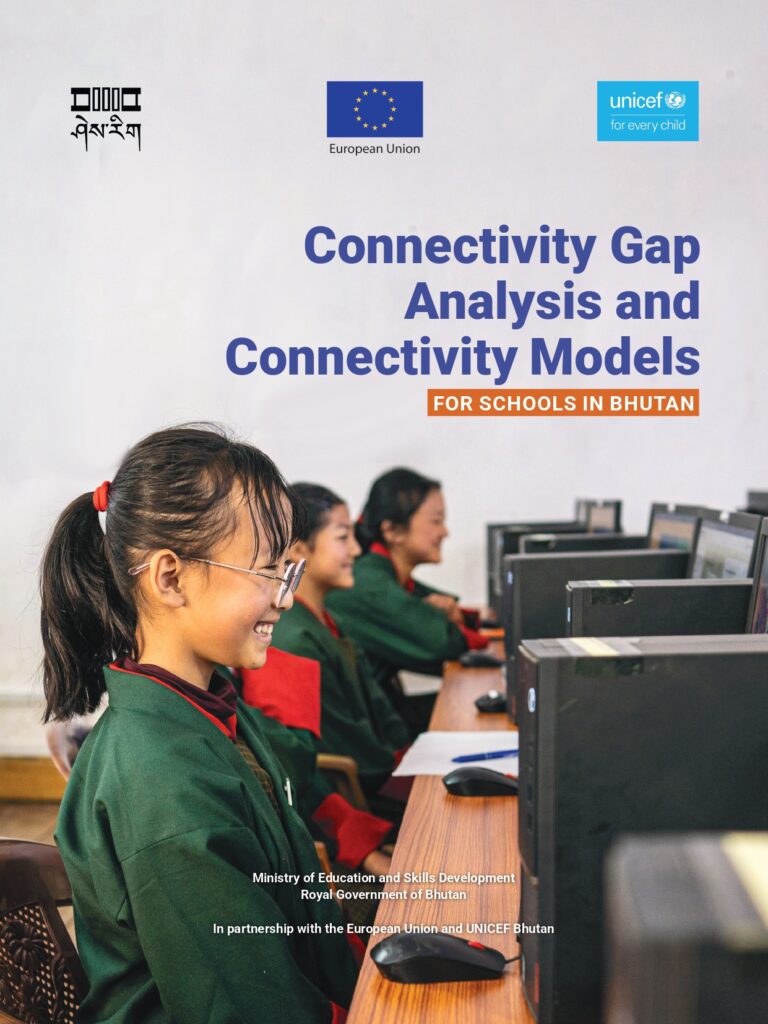
This comprehensive strategy modernizes Bhutan’s education system by embedding digital technology across teaching, learning, and governance. It establishes a structured capacity-building framework that equips teachers, MoESD officials, TVET stakeholders, and caregivers with essential digital tools, updated competency standards, and practical training packages. Through collaboration with subject matter experts, the initiative creates gender-responsive and accessible interactive STEM content for secondary grades, alongside hands-on workshops that empower a core cohort of 100 master trainers in digital content creation and curation. Crucially, the plan integrates GovTech-guided cybersecurity and online safety training—focusing on data protection, safe browsing, and combating online gender-based violence—which participants will cascade across schools while supporting policy frameworks for secure digital educational environments.
ACTIVITY 3.1. Conduct gap analysis
This activity conducts a thorough gap analysis to identify connectivity challenges across basic, secondary, and selected TVET premier schools. Through surveys, interviews, and site visits, data will be gathered on geographic constraints, network infrastructure, bandwidth, and device availability. The findings will highlight key bottlenecks—such as coverage issues and network reliability—to address the barriers hindering effective digital learning.
Activity 3.2. Design 3 new connectivity models
Based on the findings from the gap analysis, this activity collaborates with RGoB experts, civil society, development partners, and the private sector to design three innovative connectivity models tailored for Bhutanese basic and secondary schools. To extend testing, two secondary TVET premier schools from the UPSHIFT program will be included. The models will integrate advanced technologies—such as satellite, wireless broadband, or fiber optics—alongside robust cybersecurity measures, incident response procedures, and referral mechanisms. Finally, a cost-benefit analysis will evaluate the feasibility and long-term costs of these options to effectively narrow the digital divide across schools.
Activity 3.3. Procure connectivity and/or devices to test 3 connectivity models at selected schools
By collaborating with subject matter experts and instructional designers, this activity focuses on creating engaging, interactive digital learning content for two secondary-grade STEM subjects. Fully aligned with the curriculum, the content is designed to be gender-responsive and incorporates rich multimedia elements—including videos, simulations, and interactive exercises—to deepen the digital learning experience. To ensure equity and inclusivity, all materials will be accessible to every student, including those with disabilities, and made available in English at a minimum.
Activity 3.4. Strengthen national and local capacity of 100 MoESD and TVET stakeholders on the connectivity models identified
This activity strengthens digital content development skills for 100 MoESD stakeholders and master trainers through four targeted workshops and refresher sessions. Covering key principles of instructional design, creation, and curation, the practical training enables participants to build, refine, and evaluate engaging educational materials. To guarantee effectiveness, robust quality assurance processes will be applied to ensure all digital content aligns seamlessly with curriculum standards.
Activity 3.5. Establish partnerships with 2 private and public enterprises to support the implementation of connectivity models
This activity builds cybersecurity and online safety skills for 100 decision-makers, MoESD and TVET stakeholders, and master trainers through GovTech-guided training on data protection, threat awareness, online gender-based violence, and incident response. Equipped with this knowledge, participants will cascade safe online practices—such as privacy protection and digital citizenship—across basic, secondary, and TVET education sectors, while driving policy coordination to implement strong cybersecurity frameworks in Bhutanese schools.
Ministry of Education & Skills Development
- MoESD, Peling Lam, Kawajangsa, Thimphu, Bhutan
- Postal Code: 11001
- P.O. Box: 112
ICT Services
Important Links
- RENEW
- G2C Services
- Ministry of Health
- Ministry of Finance
- Audit Clearance System
- Asset Declaration System
- Zhiyog Electronic System (ZESt)
- Security Clearance System
- Department of Revenue & Customs
- Government Inventory Management System
- Ministry of Agriculture and Livestock
- Ministry of Industry, Commerce and Employment