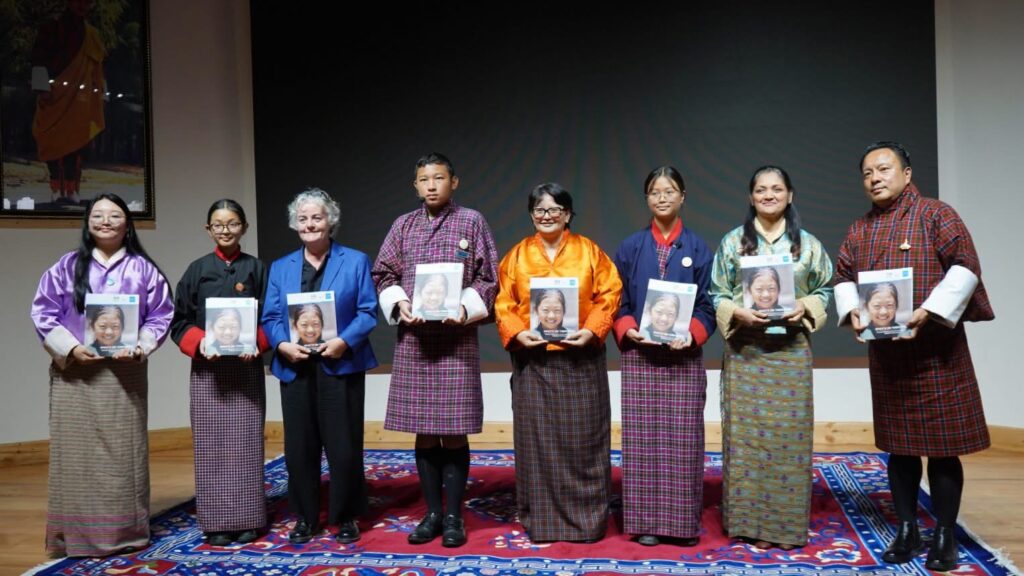


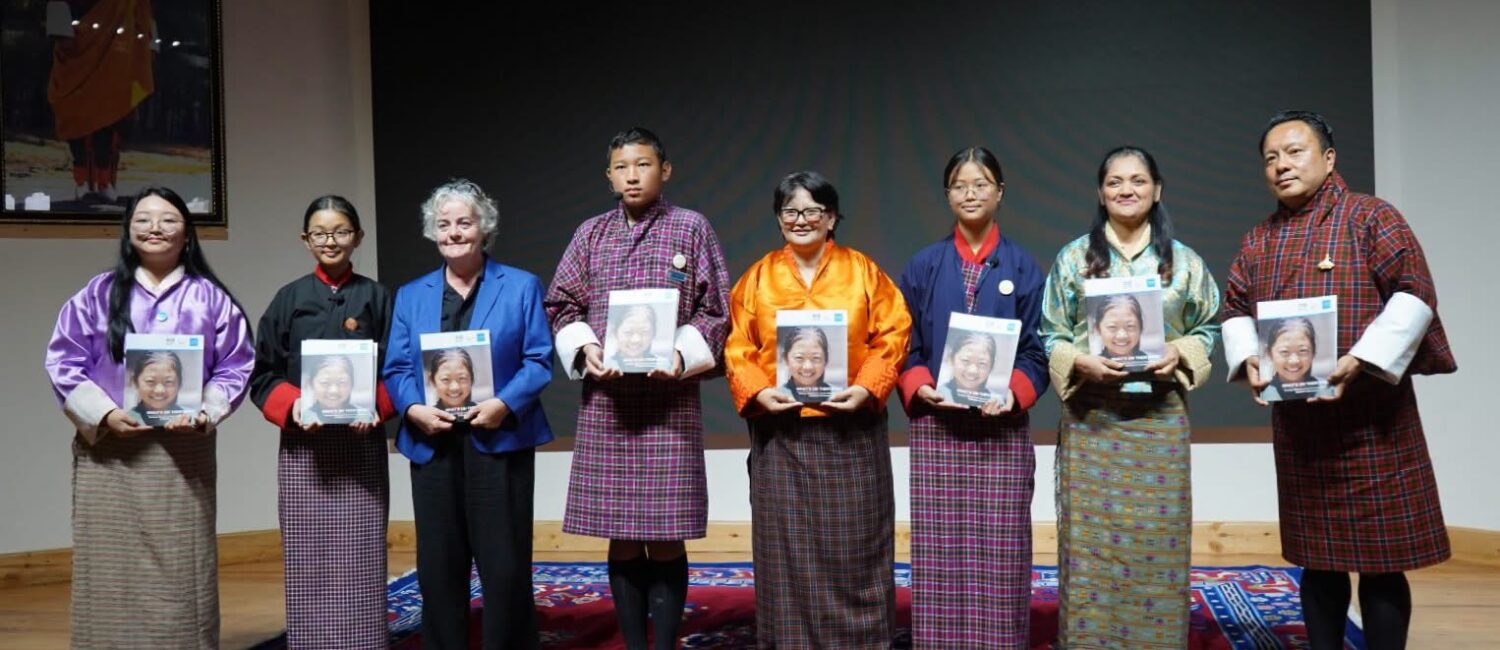
The PEMA, the Ministry of Education and Skills Development, and UNICEF Bhutan launched the OnMyMind Campaign report today at the fourth PEMA Symposium in Thimphu, highlighting young people’s perspectives and the importance of adolescent mental health.
Most young people in Bhutan know where to seek help for mental health concerns, but many do not recognise signs of stress in themselves, findings from the nationwide OnMyMind campaign show.
A mental health pulse survey conducted during the campaign found that 69.1% of respondents below age 20 recognised changes in their body or thoughts as signs of stress, while 18.2% were unsure. Some young respondents also felt they did not need support when facing mental health challenges. Together, these findings underline the need to help adolescents recognise stress early and seek support before concerns escalate.
The findings come as the four-month OnMyMind campaign concludes, having reached 5,402 adolescents and caregivers through school, community and digital engagement across the country. This included 3,721 adolescents and 1,681 parents and caregivers. The campaign was launched in June 2026 in response to growing concerns about adolescent mental health.
At the time of the campaign’s launch, available data showed that nearly one in five students reported high stress or anxiety, more than 13,000 reported a risk of self-harm during strong emotions, and 12% reported recent substance use. At the same time, 80% of adolescents reported strong family support, highlighting the significant role that parents and caregivers play in supporting young people’s wellbeing.
The pulse survey received 2,935 responses, including 2,304, from respondents below age 20. Among younger respondents, 94.4% recognised that sadness, stress and worry are normal experiences; 94.4% identified reaching out to a trusted adult or calling a helpline as the appropriate response when support is needed; and 95.2% understood the 1098 helpline as a confidential source of mental health and protection support.
The campaign period also saw an increase in children contacting support services. Data from The PEMA show that the monthly average rose from 5.6 between January and May to 6.5 between June and September, an increase of approximately 16%.
The survey also offered insights into adults’ understanding of mental health. Among respondents aged 20 and above, 81.4% recognised changes in the body or thoughts as signs of stress, compared with 69.1% of younger respondents. Most adults identified appropriate help-seeking responses (93.4%) and understood the role of the 1098 helpline (94.9%). However, a small proportion still favoured handling concerns alone or keeping them secret, reinforcing the need to equip parents, caregivers and other adults to support adolescents and encourage early help-seeking.
Overall, the campaign found progress in normalising conversations about mental health, raising awareness of support services and encouraging help-seeking. The next priority is to help young people recognise stress earlier and ensure that families, schools and service providers can respond before concerns become harder to manage.
The campaign culminated at The PEMA Symposium with spoken poetry performances by adolescents. Sharing their perspectives on mental health and wellbeing in their own words, the young performers placed adolescent voices at the center of the conversation.