
ཤེས་རིག་དང་རིག་རྩལ་གོང་འཕེལ་ལྷན་ཁག།
Ministy of Education and Skills Development



Digital Literacy Baseline to Strengthen Digital Education in Bhutan
The Ministry of Education and Skills Development, in partnership with the European Union and UNICEF Bhutan, has completed the Baseline Assessment of Digital Literacy among Teachers, Students and MoESD Officials in Bhutan. Undertaken under the EU-supported Digitalisation in Education initiative, the study provides an evidence base for implementing Bhutan’s Education Technology Framework.
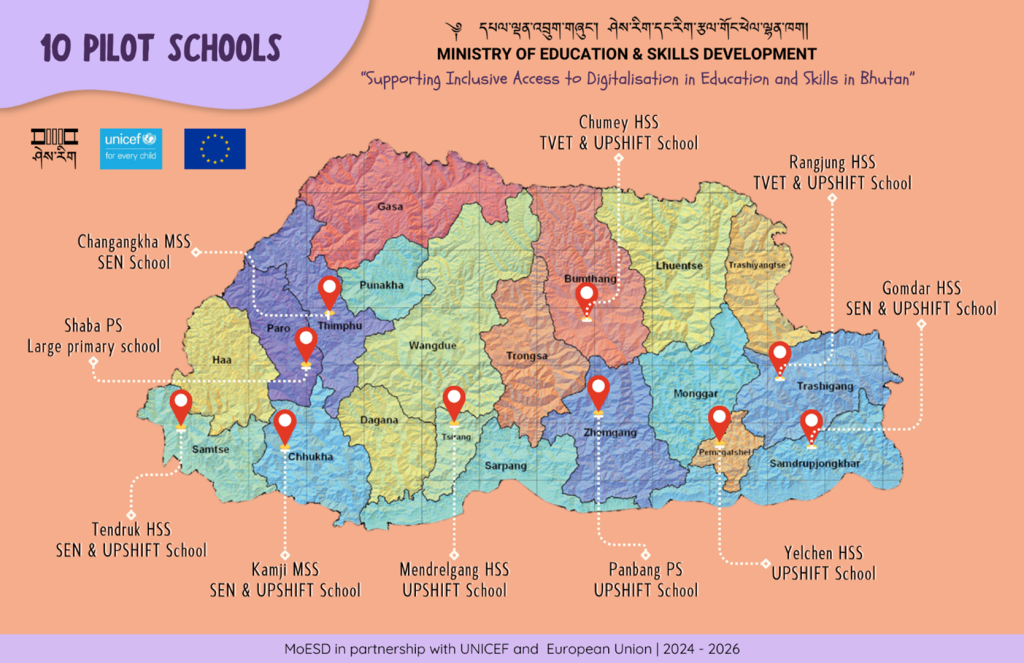
The baseline assessment covered 10 pilot schools representing diverse geographical locations, school levels and learner contexts, including schools implementing UPSHIFT, Special Educational Needs and TVET programmes. A total of 406 teachers, 447 students and 28 MoESD officials participated in the study.
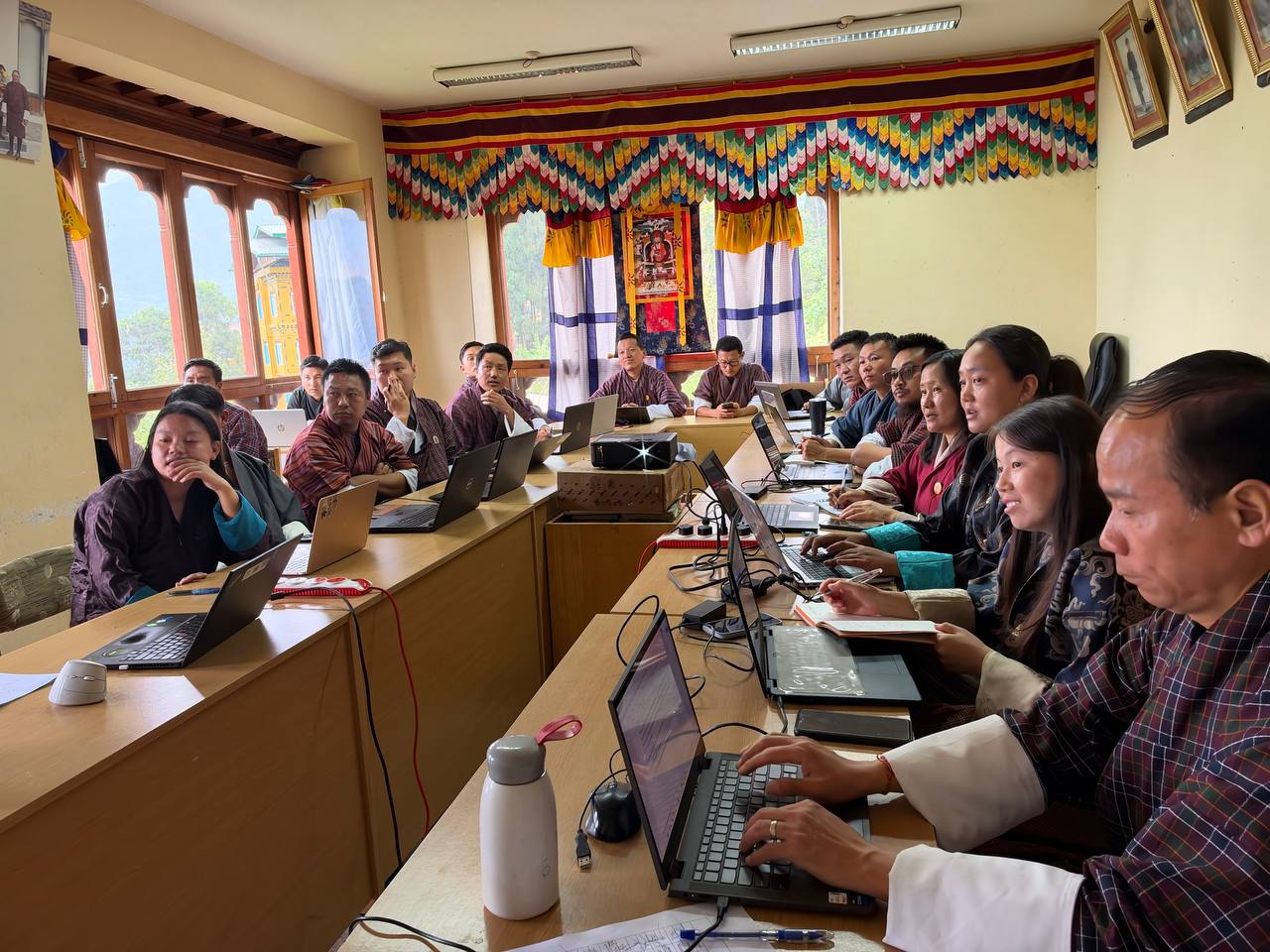
The study adopted a mixed-methods approach, combining ETF-aligned surveys, selected practical skills-based questions and focus group discussions. The assessment instruments were validated and piloted before data collection. The study was conducted by Startup First with technical guidance from an international EdTech specialist involved in the development of the ETF.
Key Findings
The findings indicate that foundational digital practices are established, while more advanced applications of technology require further strengthening.
- Teachers: Stronger practices in digital communication, accessing digital content and routine professional tasks, with further development needed in digital pedagogy, assessment, data-informed teaching and AI.
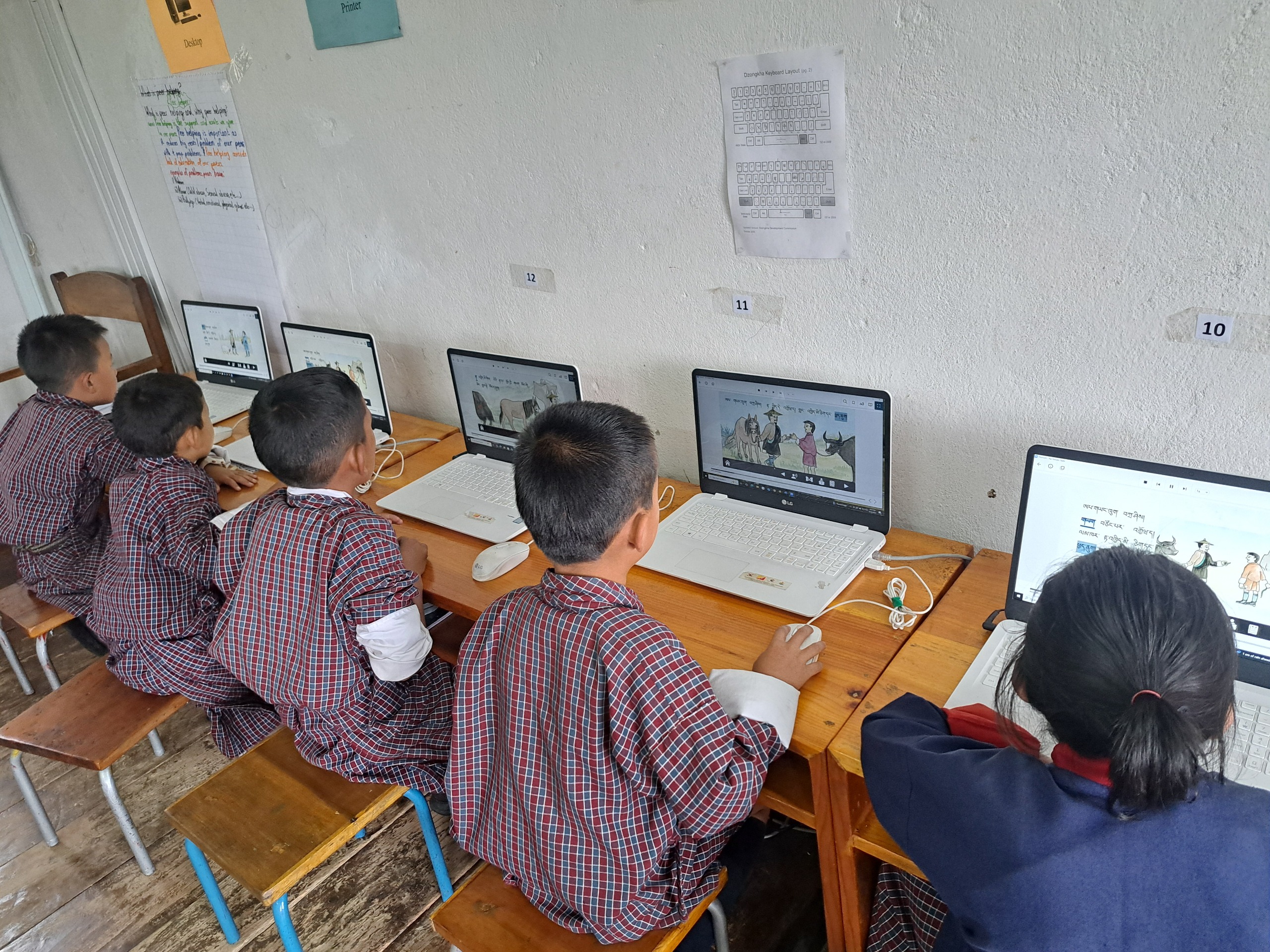
- Students: Familiarity with digital communication, information searching and routine digital tasks, with gaps in independent problem-solving, content creation and critical understanding of AI.
- MoESD officials: Stronger practices in administrative and communication functions, with opportunities to strengthen data-informed planning, monitoring and strategic coordination
The study also found that self-reported digital confidence does not necessarily translate into demonstrated competency, highlighting the importance of practical, competency-based training and assessment.
From Evidence to Action
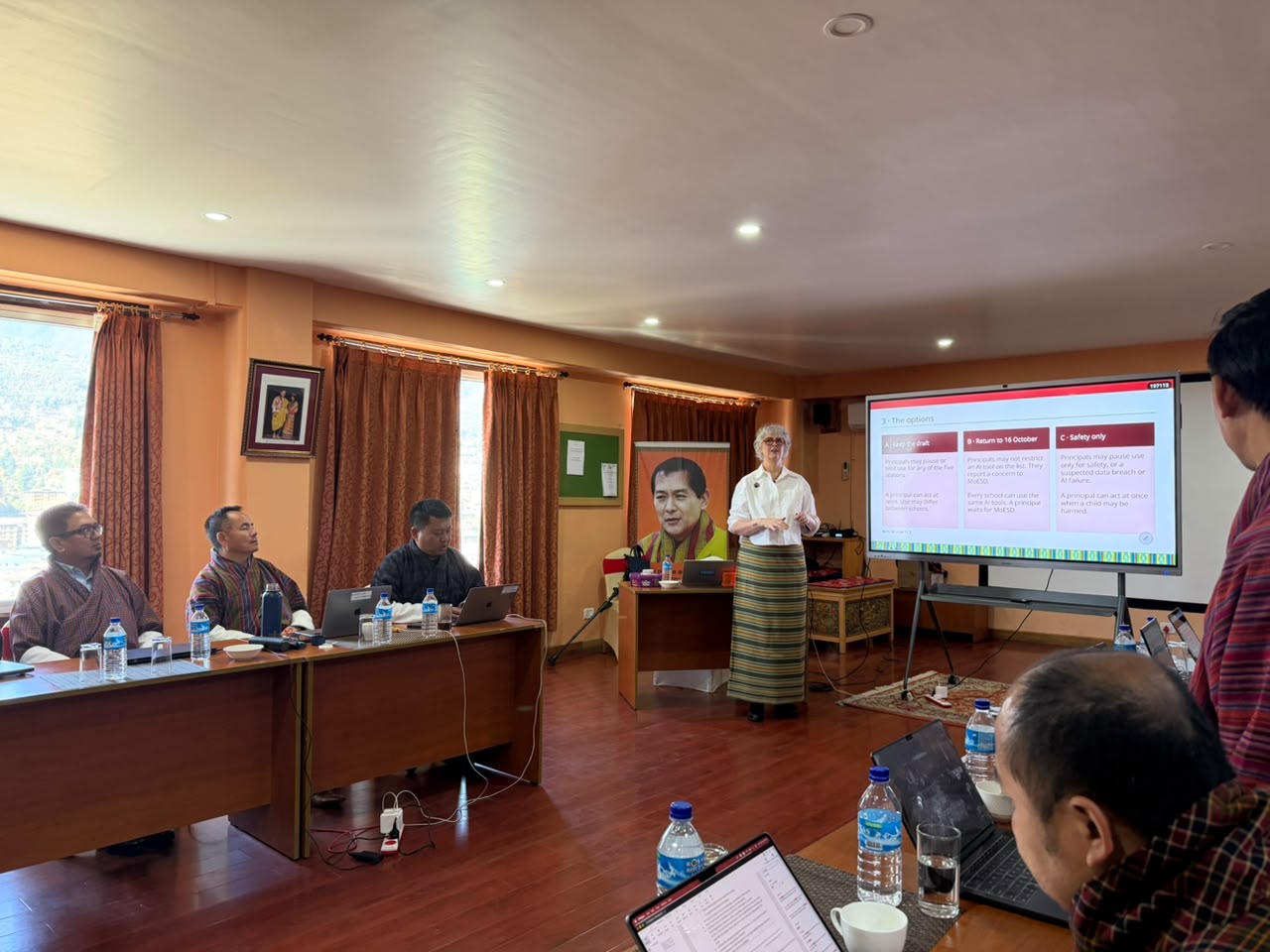
The findings will guide the implementation of the ETF, particularly in strengthening teacher professional development through the Digital Lopen programme, integrating digital competencies across the curriculum, promoting responsible AI use and strengthening institutional EdTech capacity within MoESD.
The assessment also highlights the importance of strengthening MoESD’s institutional capacity to lead and sustain digital transformation. While officials demonstrate stronger practices in routine administrative and communication functions, the report identifies opportunities to strengthen areas such as data-informed planning, monitoring and evaluation, and system-level coordination of digital initiatives.
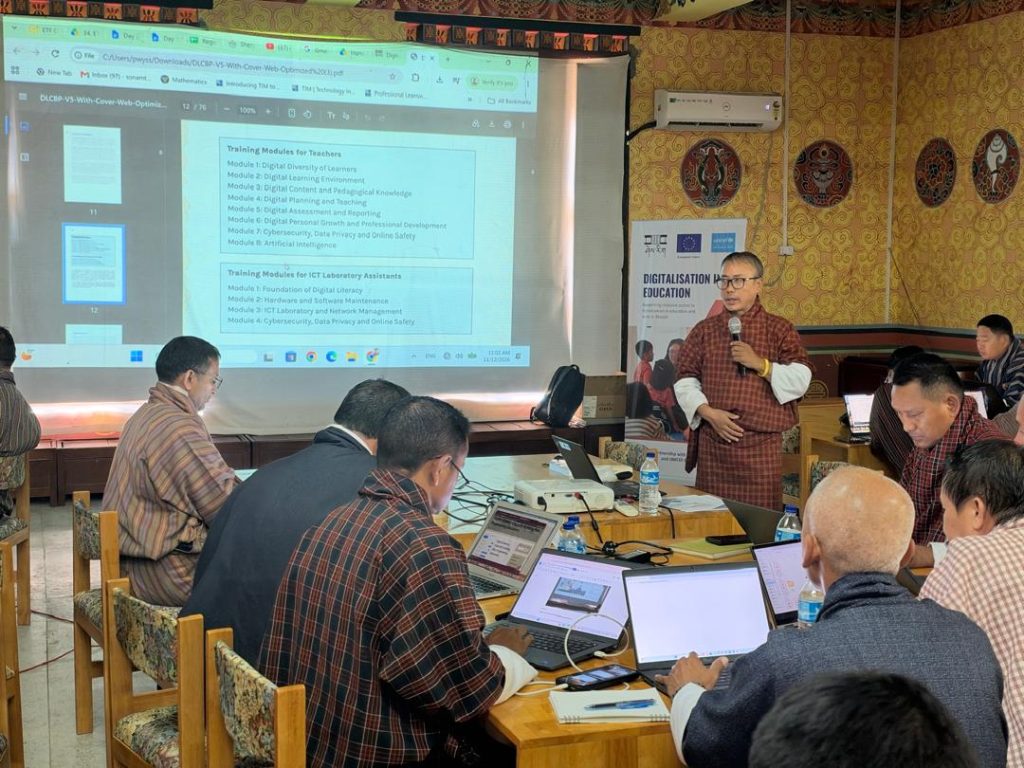
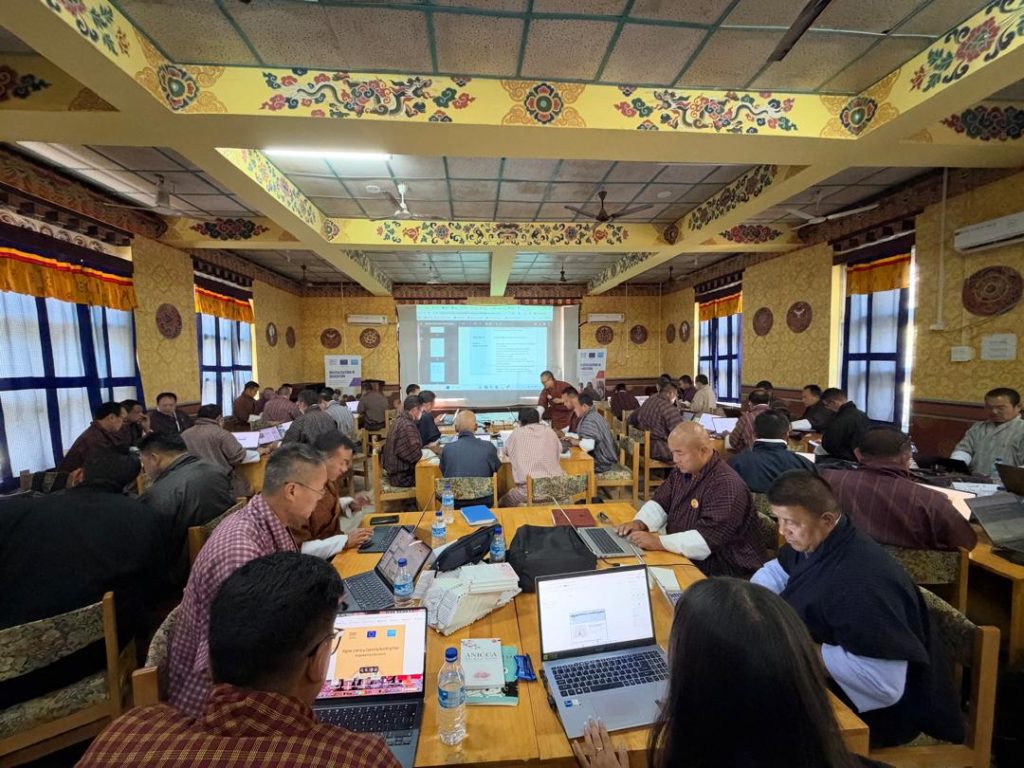
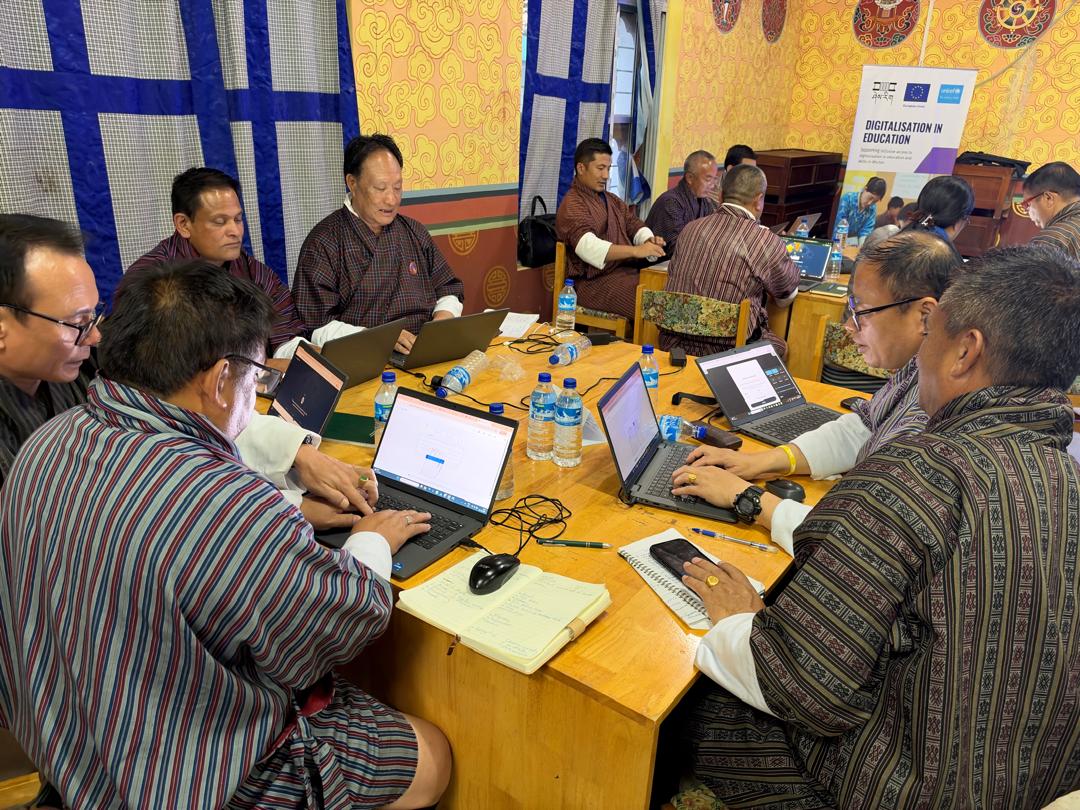
The study provides an indicative baseline rather than a national performance evaluation or ranking of schools. A follow-up assessment is planned after three years to examine changes in digital competencies, with greater emphasis on practical assessment.
With the support of the EU and UNICEF, MoESD remains committed to building an inclusive, equitable, safe and future-ready education system, where technology contributes meaningfully to improved teaching and learning outcomes.
Ministry of Education & Skills Development
- MoESD, Peling Lam, Kawajangsa, Thimphu, Bhutan
- Postal Code: 11001
- P.O. Box: 112
ICT Services
Important Links
- RENEW
- G2C Services
- Ministry of Health
- Ministry of Finance
- Audit Clearance System
- Asset Declaration System
- Zhiyog Electronic System (ZESt)
- Security Clearance System
- Department of Revenue & Customs
- Government Inventory Management System
- Ministry of Agriculture and Livestock
- Ministry of Industry, Commerce and Employment