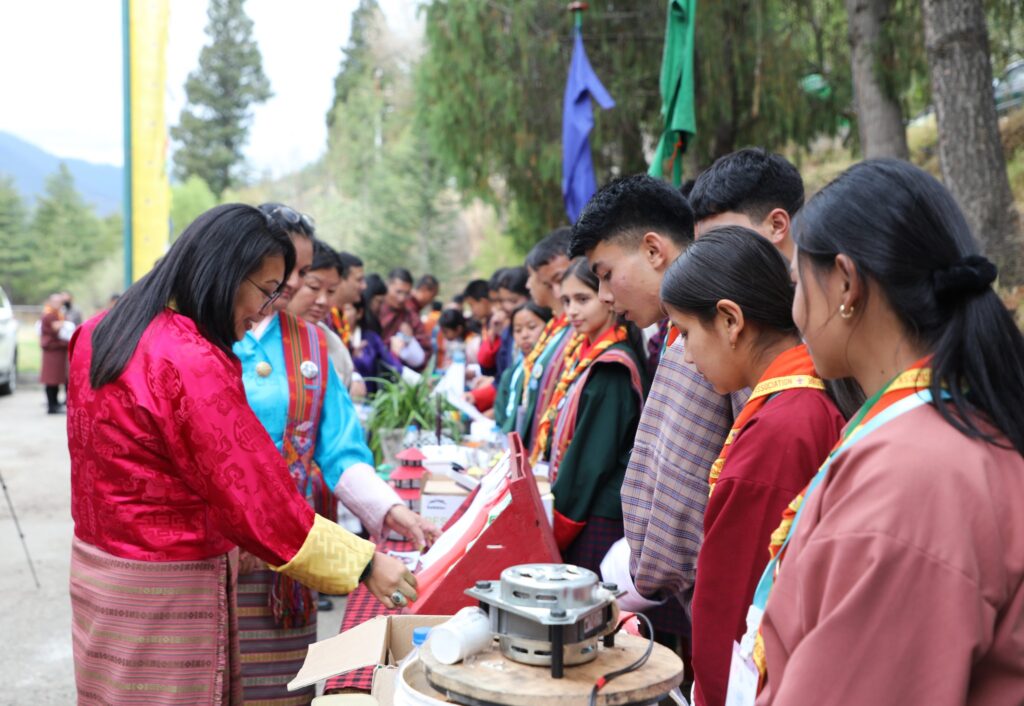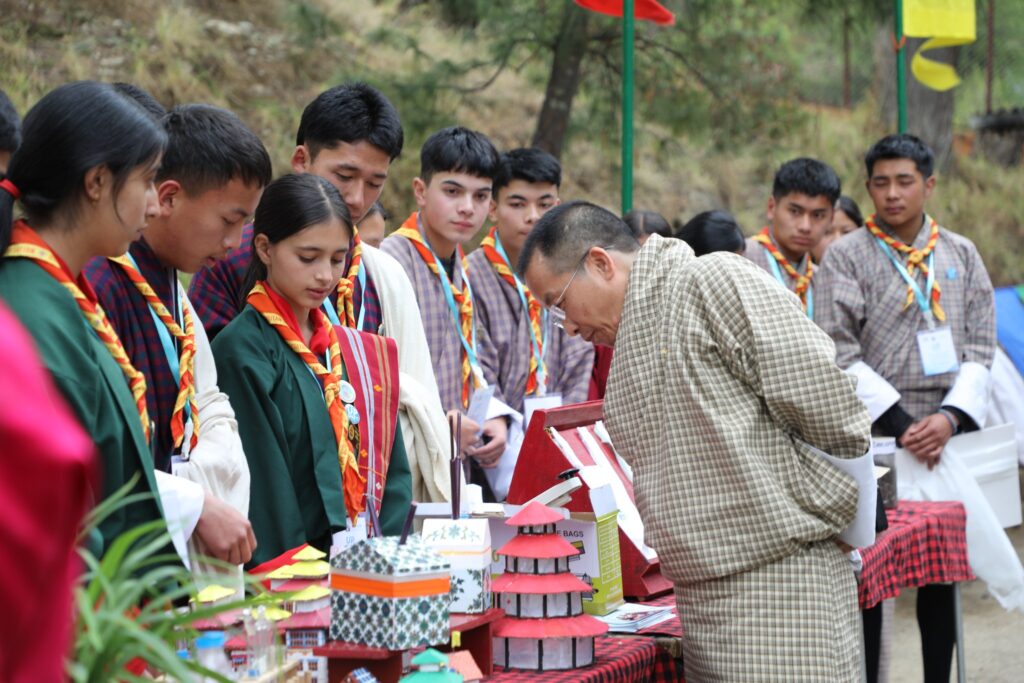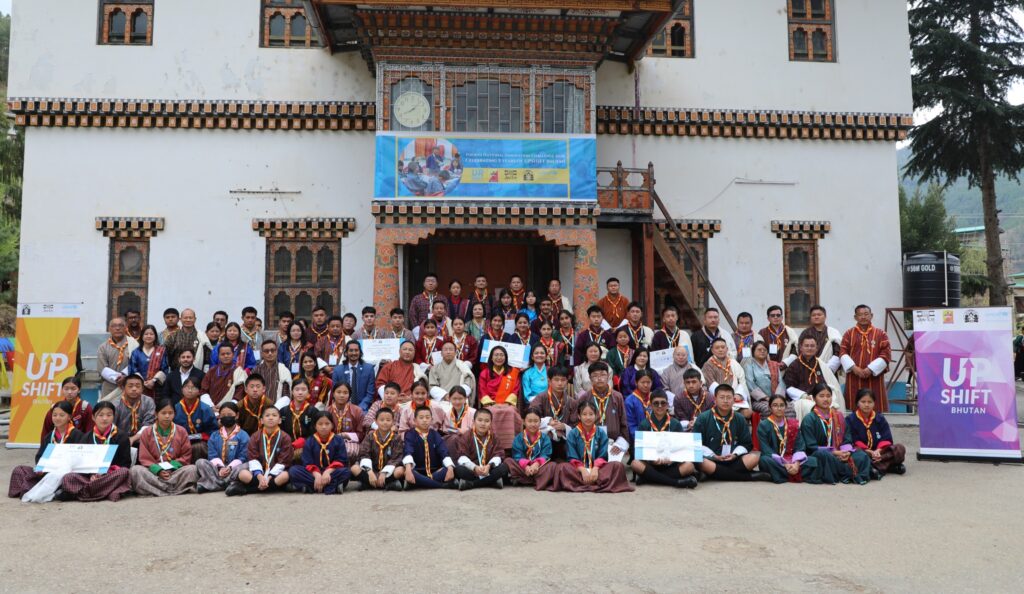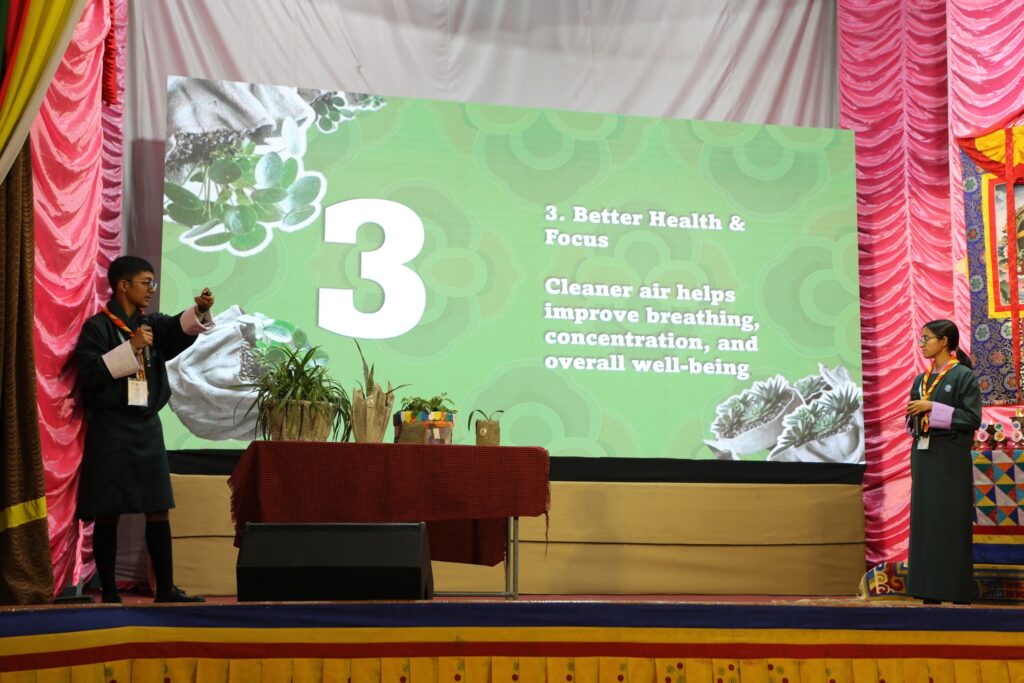


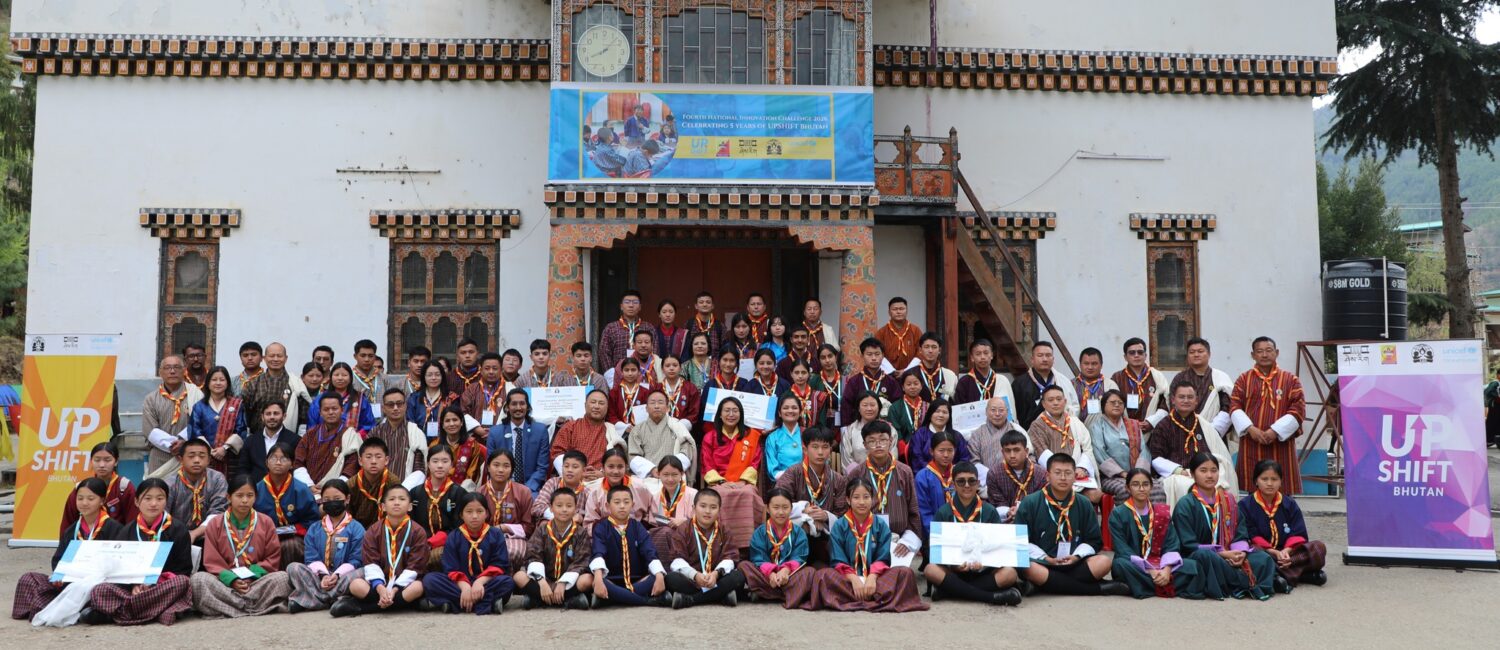
The fourth National Innovation Challenge took place yesterday in Thimphu under the theme “UPSHIFT for a Greener Bhutan,” bringing together 32 students from eight schools.
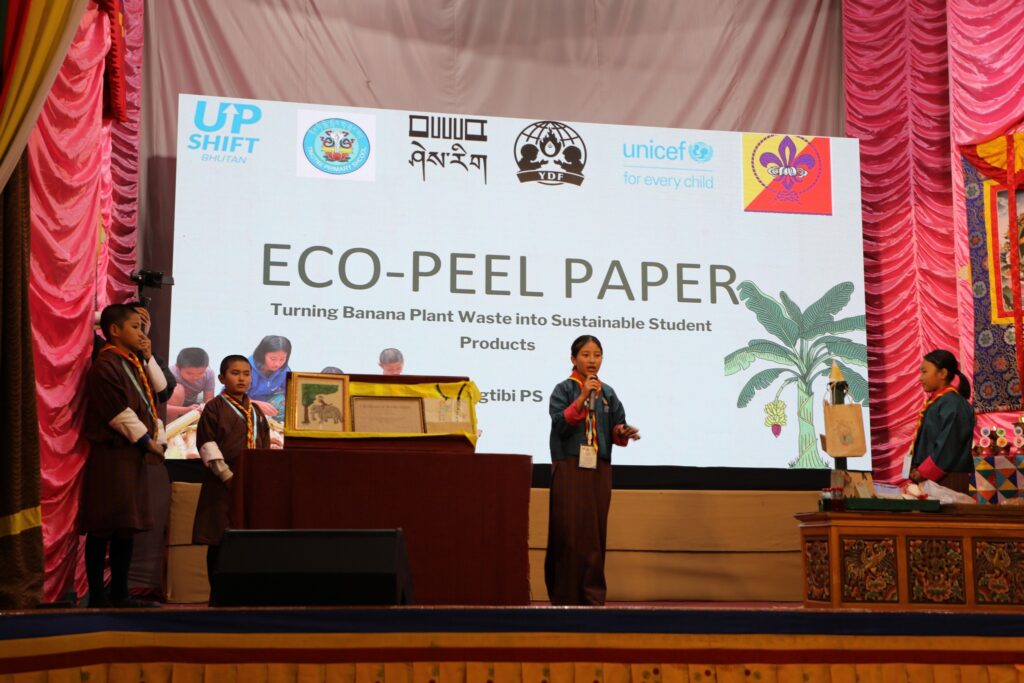
During the challenge, students showcased various innovations, such as improved methods for decomposing kitchen waste, producing paper from discarded banana plants, and creating eco-friendly pens from recycled school paper. Other ideas included biodegradable, non-toxic bioplastics and smart irrigation systems.
In the junior category, Khamdang Lower Secondary School from Trashiyangtse secured the top position with “Green Heart Ngugu,” an initiative that turns recycled paper into eco-friendly pens with plantable seed caps.
The Royal Academy from Paro stood second with “Aqua Reclaim,” a smart irrigation system while Tingtibi Primary School from Zhemgang came third with “Eco-Peel Paper.”
In the senior category, Tendruk Central School from Samtse secured the first position with their project “Druk Eco Nova,” which focuses on creating biodegradable plastic using locally sourced natural materials, offering a safe alternative that decomposes within four to five months.
Motithang Higher Secondary School bagged the second position with their idea “FLINT,” a system for fire detection and animal monitoring while Norbugang Central School from Samtse secured the third position with their idea “Vayu Vant,” an eco-friendly flower-pot.
Winners in both categories received seed funding of Nu.120,000, Nu.100,000, and Nu.80,000 respectively, to further develop and scale their ideas.
Addressing the event, the Hon’ble Lyonpo for Education and Skills Development, commended the UPSHIFT programme for empowering students to understand environmental challenges and take initiative in turning their ideas into impactful solutions.
UNICEF Representative Rushnan Murtaza emphasised the importance of collaboration among government, development partners, and the private sector to expand the UPSHIFT programme’s reach.
In addition, an UPSHIFT handbook for teachers was launched with support from the UNICEF Office of Innovation. The UPSHIFT focal teachers will use the handbook as a reference to guide students and transform schools into places of creativity and innovation.
The annual event, organised by the Ministry of Education and Skills Development in collaboration with The Bhutan Youth Development Fund and UNICEF Bhutan, also celebrated five years of UPSHIFT in the country.
Since 2022, over 27,000 UPSHIFTers from 264 schools have dedicated a staggering 1.3 million hours to develop more than 1,500 smart solutions across Bhutan. In 2026, the UPSHIFT programme aims to expand to 40 additional schools and engage over 6,000 new UPSHIFTers.
-Additional pictures by UNICEF Bhutan